
Keeping a long perspective on the journey

Opportunities and Challenges in Adopting an Enterprise Agile Framework
Frameworks give us a recipe to follow while allowing customization to suit our needs. In my third implementation of a large-scale change from more traditional project management to more agile product and service delivery, I see while each experience has been different – the reasons for change and the frameworks used – the transformations faced…


Thanks Henry
You don’t have to be a visual learner to be a fan of the Gantt chart. It visually shows to your stakeholders how your project has tasks assigned to responsible people with due dates. From executives to individual contributors, your stakeholders can see the task durations and dependencies. They can point out the milestones on…

What’s in your bizarch toolbox?
Business architects analyze their company’s business goals and strategic initiatives, and then develop the capability models needed to operate the organization. TOGAF details the inputs, activities, outputs and application of business architecture. My favorite work products are the capability maps, value stream maps, and organizational accountability frameworks. My top three tools in my business architecture…

Address the friction in your work
Resistance to change is a natural phenomenon — it’s friction! When we want to make changes, we tend to resist that change and slip back to our old ways. Consider starting a diet or kicking off a project or sliding a book across a table — we want to return to our original state. How…

Follow the sun in global operations
Managing infrastructure in a global business with 24x7x365 availability is not just about watching SLA performance. Continuously improve systems, follow the sun in your support models, and leverage industry frameworks to keep your systems flying. And let’s not forget about good design, architecture and testing…

Our Book Launch
We are excited to announce the launch of our new book, Management Is Not Rocket Science… It’s Just Physics. We help new technology managers lead their teams through change and drive innovation adoption in their organizations by applying what they learned in physics class to management scenarios. Friction? Forces? Free body diagrams? These concepts apply…
Change Leadership
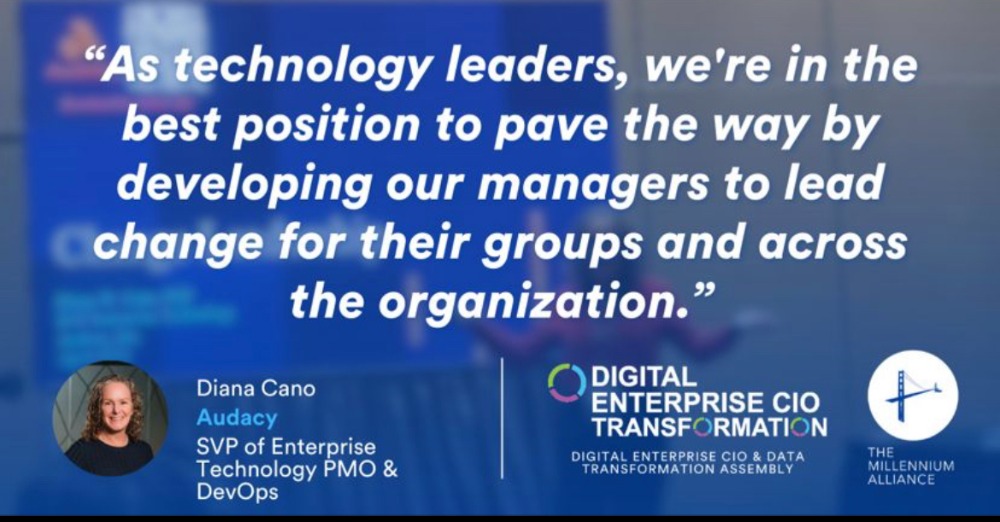
Call to Action for CIOs: Develop change leadership skills with your early career managers Our current technology leaders have technical degrees where very little time was spent teaching the soft skills of managing people. Our current situation leans on these managers to lead change. As technology leaders, we are in the best position to pave…

Build your Program Management Office as a Transformation Office
For an existing organization with a long history and a staff priding themselves on the longevity and consistency of the business, moving to a digital-first business model is a significant shift. The PMO needs to focus the projects on outcomes improving basic blocking and tackling of technology performance as well as transformational efforts in laying…
Using Existing Assets to Build a Digital Future
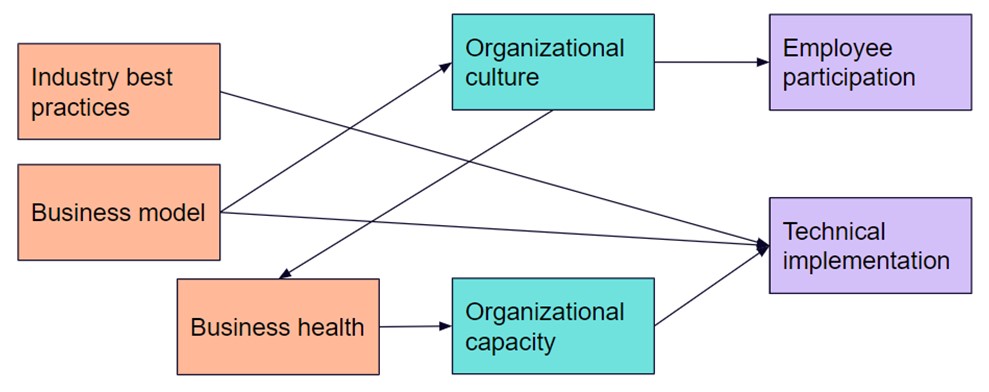
Longstanding institutions build assets over time and as industries pivot and consumer trends evolve, these companies need to use their assets as leverage in building future growth and relevance. It is so easy to stay where we are comfortable. Traditional organizations Traditional organizations understand waterfall project management with task lists and gantt charts. Strategy comes…

Management by MGu
Engineering students study math and physics throughout their academic life and learn to solve problems using basic math and physics rules deterministically, with precision and little interpretation of the solution. Today, as more and more engineers become managers, they find themselves needing more soft skills to lead and manage their team, like getting the “buy-in”…
Something went wrong. Please refresh the page and/or try again.
Follow Us
Get new content delivered directly to your inbox.
 Blue Cairn