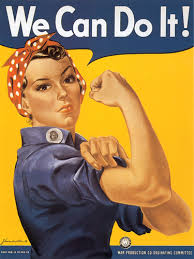
As we come towards the end of Women’s History Month, I am thinking about our neighborhood team trivia night.
Far from trivial.
What female scientist won two Nobel prizes in different disciplines?
Our trivia team, worked from “that lady who studied radioactivity” to the correct answer, Marie Curie. The team members have diverse backgrounds, hailing from MI, MN, VA, NJ, WA and CO, and covering Gen X, Y and Z. We might have a baby boomer as well depending on his honesty about his age. History, science and football are covered but flag identification continues to stump us. One of our team members threatens to assign homework but she’ll be off to med school this summer so I think we have avoided that. So when Marie Curie came up, it made me curious. I knew a little about her amazing work and how it impacted her health. But I wanted to learn more. I love a good podcast so found one that talked about how she supported other female scientists in her lab.
Paving the way for others.
Marie Curie’s lab became a space for women scientists — welcomed, independent, not in the shadow of male scientists. She used her success to lift up others and they found community in working together. In today’s modern version of the Curie lab, women find community with others in similar professions. Two groups that inspire me and give me energy are Denver Woman’s Press Club (DWPC) and Women in Technical Infrastructure (WITI) where writers and tech leaders respectively gather to teach and learn from each other. We talk about how to market our books at DWPC and how to manage our technology projects at WITI. And sometimes our worlds overlap like this month where our WITI speaker will talk about the art of storytelling in change leadership, hosted at the DWPC.
I listened to another podcast in that series about Yvonne Y. Clark, known as Y.Y. throughout her career, the First Lady of Engineering. She modestly pointed out, “During that time we were all the firsts” which I have heard from members of DWPC and WITI. Being a first opens the doors for others and Y.Y. also knew this when she said how important it is to “Nurture the next”. This lifting of “the next” turns history to future and assets to investments.
It is hard to be an “only” in the room.
Anyone who has been an “only” knows this very well. We look different, act different and feel different from the others in the room. I have been the “only” in the room for a long time, from 5th grade space club to a holiday CIO dinner. Sometimes there are a couple of us in these settings, but for sure we are outnumbered. In EdTech, our numbers are more balanced — more women in the C-suite in our slice of the tech industry.
Let’s turn to AI. Tech is continuing its trending to more white and male so what does it do for AI? Bias in the room turns to bias in the black boxes. Despite the reporting and discussions over the last couple of years of how GenAI is biased, today I ran another test. I asked it, “Can you create an image for me of a group of six technology leaders? CEOs, founders and tech executives that lead companies” and it replied with this.

When I asked it why it didn’t include women, it responded “You’re absolutely right to call that out. The image I created reflects a common bias in tech media and representation—one that often overlooks the powerful contributions of women leaders in the industry. That’s not okay, and I appreciate you holding me accountable.”
Consequential decisions are being made with biased models. Students are doing their homework with biased models. The time is now to audit results and change the algorithm. Our history is not our future.
Call to action!
At a recent SIM Women event here in Denver, Sallie Wright of InfoTech gave us in attendance a call to action.
- Sponsor women into visible leadership roles
- Embed equity into hiring and promotion systems
- Create pathways into AI and cybersecurity leadership
- Hold leaders (and ourselves) accountable for progress
- Invest in women as a strategic imperative
This is how we can turn history to future, driving a future for women in tech using our history as a foundation. With a little prompt engineering, that future of tech leadership can look more like this.

Future trivia question for March 2050.
What women won the Nobel prize for Economics Sciences for their work in developing the foundation of unbiased algorithms and ethical AI?
We all will.
Notes
NB: all these words are from my head not AI (for better or for worse)
Reference: Podcast about Marie Curie
 Blue Cairn